

CANSAT 2026
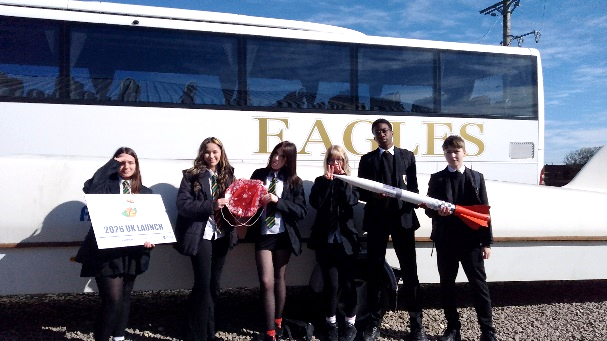
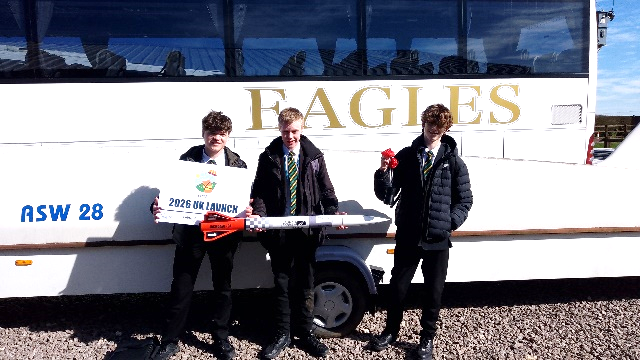
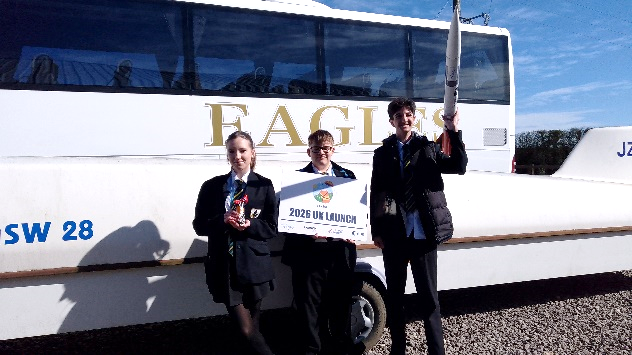
Congratulations to the year 11 Computer Science pupils who successfully launched their CanSats, with the help of Connaugh, on board a real rocket at the British Model Flying Association headquarters in Buckminster on the 26th March.
The rocket accelerated from 0 to 200 mph in 0.9 seconds and exposed the CanSat inside to 20g of force. Only 10% of CanSat launches successfully gather and broadcast data from the sensors to a ground station. This 10% now also includes the South Charnwood pupils as all of their CanSat’s sensors worked perfectly and broadcast full data to the waiting ground station.
This exciting day was the culmination of a European Space Agency initiative aimed at secondary school students, to develop their technology, physics, and programming skills by offering the practical experience of working on a small-scale space project called a CanSat. Students were responsible for all aspects of the project: selecting the mission objectives, designing the CanSat, integrating the components, testing, preparing for launch and then analysing and reporting the data. A CanSat is a simulation of a real satellite, integrated within the volume and shape of a soft drink can. The challenge for the students was to fit the major subsystems found in a satellite (such as power, sensors and a communication system) into this minimal volume. In the UK competition the CanSat is launched to an altitude of 300-400 metres by rocket to carry out scientific experiments designed by the students, parachuting back to Earth to achieve a safe landing.